
Just Stay in the Race
A few weeks ago, I ran 100 miles through the mountains of Colorado. I ran the famous ultramarathon called the Leadville Trail 100. An accomplishment I have been chasing now for many years…ever since I lost my toes, ironically.
You start the race at just over 10,000 feet above sea level and then climb over 15,000 feet in elevation gain. You go over Hope Pass—twice. You run through the night. You eat while you’re running. And you occasionally question every decision you’ve made in your life that brought you to this particular moment(and that’s not sarcasm)😊 It was 28 hours of extreme highs, followed by extreme lows. Ultra running can be more of a spiritual experience than it can be physical.
Somewhere out there during those 100 miles, I realized something though – I’ve spent a large part of my professional life talking about investing and the truth of markets. And I’ve spent a large part of my personal life doing difficult things in the mountains/outdoors. And increasingly, I’m convinced they’re teaching us the same lesson: Our success doesn’t really have much to do with what happens to us, but has everything to do with how we react to what happens to us.
That’s true in an ultramarathon. It’s true in investing. And it’s true in life…certainly has been with mine.
THE MOUNTAIN
My relationship with mountains started long before Leadville. One particular mountain changed my life forever. On November 22, 2002, I was involved in a mountaineering accident. What followed was a long ordeal with severe frostbite that ultimately cost me my fingers and my toes…and eventually my identity.
When something like that happens, your life really gets divided into two parts.
Before…And after.
Before the mountain, I thought I was untouchable. My entire life of abundance was all in front of me, so I thought. I had dreams. I thought I understood a lot about how the world worked. But afterward, I wasn’t so sure. But strangely enough, that uncertainty eventually became one of the greatest gifts of my life.
I started questioning things. What do I actually know? What do I merely believe? What have I accepted because somebody else told me it was true? What does the evidence actually say? And what am I really capable of? I began searching for truth in every part of my life – Spiritually. Personally. And professionally.
At the time, I was building my career in financial services, an industry where people are rewarded for sounding certain. They make forecasts. They predict markets. They talk about where interest rates are headed. They debate which sector is going to outperform.
This industry will find the smartest-looking person on television and ask them what the market is going to do next. And then six months later, when they’re wrong, they invite them back to tell us what’s going to happen next. It is unbelievable really. It is of the most puzzling and facinating human behavior conundrums I have ever seen – these very smart people are completerly blind to their own inability to outsmart the market. They all know and have seen the data. They’ve even seen their own track record. But continously, they sell one victory as skill over luck, the story gets lost in the randomess, and then they try it all over again…with someone else’s money by the way. Amazing.
I began asking a different question though in the office: What if we don’t have to know? What if successful investing isn’t about prediction? What if it’s about building a philosophy strong enough that we don’t have to? I began looking at the data, at the evidence, at the truth, and that question eventually led me towards what is now often referred to as evidence-driven investing. I prefer to just call it the truth.
Strangely enough, years later, as I stood at the beginning of this race, the basic tenants of that investment philosophy would also help me run 100 miles.
LESSON ONE: CONTROL WHAT YOU CAN CONTROL
If you stand at the starting line of Leadville thinking about mile 100, you’re already in trouble. It’s overwhelming.
One hundred miles above 10k feet, with thousands of feet of climbing and descending to boot (and with no toes for me).
We go over the famous Hope Pass, up to 12,500 feet above sea level… and then right back down it. Only to then turn around and go right back up and down again…and then, you’re left with just an easy 40 more miles through the rolling forest at night, crossing creeks, enduring rain and thunderstorms, battling chaffing and nauseousness, and whatever else the night can throw at you.
There are simply too many variables. You learn very quickly to separate the world into two categories:
Things I can control.
And:
Things I can’t.
I can’t control the weather. I can’t control the altitude. I can’t control what another runner does. I can’t control whether my stomach decides at mile 65 that food is suddenly its mortal enemy.
But, I can control my hydration. I can control whether I eat. And most importantly, I can control my attitude.
Successful investing works the same way.
We cannot control or outsmart the market. We cannot control interest rates. We cannot control inflation. We cannot control elections. We cannot control geopolitics. The list is endless. And perhaps most importantly, even if we could predict and control those things, we could still never predict or control how the market will react to those things! Yet, look at how much energy most investors—and our industry—spend obsessing over exactly these things.
Meanwhile, the things that actually matter are sitting right in front of us.
How much are we saving? How diversified are we? How much risk are we taking? What are we paying? Are we tax efficient? Do we have a financial plan? To be good at investing, we have to be able to separate our emotions from our decision making. We can’t let results drive our process, we have to let process drive our results. We must focus on the things we can control, and surrender the rest.
And that’s the first connection between all this:
Stop trying to control the mountain. Control yourself.
LESSON TWO: HAVE A PHILOSOPHY BEFORE YOU NEED IT
You don’t develop your Leadville philosophy at mile 75. That’s too late.
You must decide beforehand. How hard are you going to run early? When are you going to eat? How are you going to hydrate? What happens when something goes wrong? What will cause you to stop?
Because at some point, your emotions are going to become unreliable. Your body will tell you to stop. Your brain will begin negotiating with you. “This is stupid.” “You’ve gone far enough.” And my favorite one that was constantly preached by my inner critic – “Nobody would blame you for stopping without your toes.” What BS! It’s actually because I lost my toes that I have the grit and strength to do this! No toes is actually a strenght for me, I gained much more than I lost.
That’s why you need a philosophy before the suffering starts.
Markets are no different.
Nobody needs an investment philosophy when the market goes up 20%. Your philosophy becomes valuable when the market is down 30%. When the headlines are terrifying. When your neighbor got out three months ago and is now bragging about his genius stock broker at your BBQ. When every instinct in your body is screaming: Do something.
That’s when philosophy matters. Because without a philosophy, every decision becomes emotional. You must have principles. A process. A plan. And all these things come from your philosophy.
You make your biggest decisions before the race begins. Always show up prepared.
LESSON THREE: EXPECT THE PAIN
There is a saying in ultrarunning: It never always gets worse.
I love that. Because if you run long enough, something will go wrong. You will feel terrible at some point. That is unavoidable.
And when you’re in that moment, your brain does something interesting. It assumes the way you feel right now is the way you’re going to feel forever. Pain can feel eternal when we are in the middle of it.
At mile 70, you don’t think: “I’m having a difficult twenty minutes.” You think: “I’m done, this is the worst idea ever.” But then you eat something. The sun comes up. Someone tells a joke. You reach an aid station and get some hugs. And then twenty minutes later, you’re running again and smiling.
Markets do the same thing to us.
When things are good, we believe they’ll stay good forever. When things are terrible, we believe they’ll stay terrible forever. Neither is true. Human beings have an extraordinary tendency to take the present and project it indefinitely into the future. That’s dangerous.
The great investors, the great humans, and the great runners aren’t people who never experience fear or pain. They’re people who understand that fear and pain is just the price of admission.
We can let short term emotions drive our long term decisions.
LESSON FOUR: HUMILITY IS A SUPERPOWER
The mountain taught me humility long before Leadville did.
My accident taught me that life can change very quickly. It taught me that I wasn’t in as much in control as I thought I was. And eventually, I began seeing humility differently.
Humility wasn’t weakness. Humility is just having an accurate assessment of oneself. And that’s incredibly important in running, investing, and in life in general. You have to know thyself…and you have to know the game your playing.
Think about how many investment mistakes begin with the same two words: “I know.” I know this company is going higher. I know the market is going to crash. I know rates are coming down. I know this election is going to destroy the market. I know AI is a bubble.
Well, maybe?
Good investing doesn’t require us to know what happens next. That’s the beautiful thing about it. That’s the truth. We can acknowledge uncertainty and still have conviction behind our approach. Why? Because we have the right underlying philosophy. We’ve read and researched the data which in turn strengthens our beliefs. We’ve watched others before us and taken notes. We’ve formulated conviction in our investment philosophy by truly building a strong foundation of belief and knowledge.
Which then brings me to the role of an advisor.
Working with advisors for the last 24 years, I’ve noticed something fascinating. The advisors who truly embrace an evidence-driven investment philosophy actually become better advisors and business owners. Not just a better investor.
Why?
Because they stop spending so much time trying to solve something that can’t be solved. They don’t need to spend Monday morning guessing where the S&P 500 will go. They don’t need to constantly find the next hot manager. They don’t need to justify why they sold this fund and bought that one. They rely on science, data, and their investment philosophy.
And instead, they get to spend their time on things that can profoundly change their clients’ lives – Financial planning. Tax planning. Estate planning. Helping clients make smart decisions around their businesses. Helping families communicate about money. Helping someone retire confidently. They get to spend more time actually knowing their clients and providing a true comprehensive wealth management experience. It allows them to truly become irreplaceable assets to their clients. It makes them more valuable.
Humility is a superpower to those who live in it.
LESSON FIVE: JUST STAY IN THE RACE
There comes a point in an ultramarathon where the equation becomes incredibly simple. Forward. That’s it. You just need to keep moving forward. And I think this may be the greatest lesson of all for investing, living, and running.
Why? Because compounding has one essential requirement: Time.
I think the greatest trait we can develop and live by is what I call – “being unstoppable”. Being unstoppable doesn’t mean you just win all the time. Quite the opposite actually. Being unstoppable is the confidence and experience to know that no matter how many times you fail, or no matter what is thrown at you, that you’ll always get back up. That you’ll always finish. It’s understanding that all things are attainable with the right attitude and grit. Something might make me fall, but its not going to stop me from getting back up and finishing…again, again, and again. Failure is just a stepping stone to something greater.
You have to stay in the game to get the returns! A good plan you can stick with is infinitely more valuable than a perfect plan you can’t.
Markets will test you. Life will test you. The mountain will test you. The objective though isn’t to eliminate those tests. It’s to build a philosophy capable of surviving them.
Leadville is an out and back run. We run out 50 miles, come back 50 miles. Because of that, eventually we begin seeing the lead runners coming our way on their way back home. I was just beginning my first ascent up Hope Pass, not feeling good mentally or physically, and projecting out what the next 60 miles would feel like. Overwhelming. I knew this feeling would come, I had prepared for it, and as much as I wanted to quit, I promised myself prior that I wouldn’t listen to that voice. I would just take another step…because embedded in my philosophy was the knowledge that it will get better…eventually.
And then, something magical happened to me.
My energy changed. I had been stuck inside myself. Inside my own pain. Inside my fatigue. And inside my own race. Then runners started coming toward me. We’d look at each other. “Great job.” “Keep going, man.” “You’ve got this.” Sometimes we’d smile. Sometimes one of us was crying. I cried plenty that day, that’s for sure.
But each time I encouraged somebody else, something inside me changed. My energy shifted. I stopped thinking about myself and suddenly I could feel something much bigger happening. I could feel love between complete strangers. I could feel God in those moments talking to me. I was overwhelmed with tears of joy. Suddenly, I was fueled by gratitude and my grit returned. My smile returned and I kept moving forward. I took a mental note though, knowing that this feeling would come back at some point before I got back to the finish line. Just like life or another bear market, it was just a difficult season I was going through, and more would come.
Just stay in the game. It always gets better…eventually.
THE FINISH LINE
Eventually, after a very long day and night, I came back into Leadville. One hundred miles.
Crossing that finish line wasn’t really ever about running for me. It never was. The finish line was simply where all the lessons became visible. For the previous months leading up to the race, every training run where I would daydream and start thinking about this finish, I would begin to cry. It had been a long lonely journey to get here with an emotional load that was getting too heavy to carry anymore. I needed this vistory.
The preparation. The discipline. The mistakes…oh man, all the mistakes. The people who helped me. The moments I wanted to quit. And the decision to just take one more step…in my personal life, my professional life, and now out here on this beautiful trail. This race was teaching me about myself. It was teaching me about the fundamentals of good living, and good investing.
Twenty-four years earlier, I came off another mountain without my fingers and toes. At the time, I couldn’t possibly have imagined that someday those same mountains would become the place where I discovered so much of who I am. I was told by many doctors and nurses that I would never run again. That my feet could never hold up. It was those comments and all my failures before that made me want to do this.
Often times the obsatcle is the way. Leadville had become my obstacle.
That accident definitely changed my body, but more so, it changed my philosophy, which in turn drove my new attitude. It changed the questions I asked and the way I looked at the world. Life stopped happening to me, and began happening for me.
What I eventually discovered was surprisingly simple. You don’t have to control everything. You don’t have to know what’s around every corner. You just need a philosophy that will dictate how you will move forward. A philosophy built from truth.
The next time markets become scary—and they will—remember that discomfort doesn’t necessarily mean something is wrong. It is simply part of the course, the other side of return. Trust your plan.
And just stay in the race.
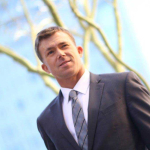
Author: Matt Miller
Matt Miller has done many things in his young life...in addition to just surviving. In 2002, Matt left behind person he once was as his life was suddenly changed forever by a horrendous mountain climbing accident. Diving for his falling father, Matt fell over 4,000 feet before miraculously stopping just short of the ragid cliffs. Through a night of survival and pain, Matt persevered but lost most of his fingers and toes as a result from frostbite. Matt does everything from public speaking, one-on-one consulting, firm strategy, as well as company retreat facilitation. With a seasoned investment background and passion for educating the investment world, Matt also can't resist sharing his comments from time to time on markets. Matt is also an avid ultra runner and outdoor enthusiast...with a big love for spending time in the Grand Canyon.