
Leadville and Life – Staying in the Game
I ran 100 miles through the mountains of Colorado. The Leadville Trail 100.
You start at over 10,000 feet above sea level. You climb and descend thousands of feet. You go over Hope Pass—twice. You run through the night. You eat while you’re running. You occasionally question every decision you’ve made in your life that brought you to this particular moment.
And I did it without toes.
Which, as it turns out, are actually somewhat useful for running.
But somewhere out there during those 100 miles, I realized something.
I’ve spent a large part of my professional life talking about investing.
And I’ve spent a large part of my personal life doing difficult things in the mountains.
And increasingly, I’m convinced they’re teaching us the same lesson:
Success has far less to do with predicting what is going to happen next and far more to do with preparing ourselves to respond when it does.
That’s true in an ultramarathon.
It’s true in investing.
And I think it’s true in life…certainly has been with mine.
THE MOUNTAIN
My relationship with mountains started long before Leadville.
And one particular mountain changed my life forever.
On November 22, 2002, I was involved in a mountaineering accident.
What followed was a long ordeal with severe frostbite that ultimately cost me my fingers and my toes.
When something like that happens, your life gets divided into two parts.
Before…And after.
Before the mountain, I thought I understood a lot about how the world worked.
Afterward, I wasn’t so sure.
And strangely enough, that uncertainty eventually became one of the greatest gifts of my life.
Because I started questioning things.
What do I actually know?
What do I merely believe?
What have I accepted because somebody else told me it was true?
What does the evidence actually say?
I began searching for truth in virtually every part of my life.
Spiritually.
Personally.
And professionally.
At the time, I was building my career in financial services, an industry where people are rewarded for sounding certain.
We make forecasts.
We predict markets.
We talk about where interest rates are headed.
We debate which sector is going to outperform.
We find the smartest-looking person on television and ask them what the market is going to do next.
And then six months later, when they’re wrong, we invite them back to tell us what’s going to happen next.
I began asking a different question:
What if we don’t have to know?
What if successful investing isn’t about becoming better at predicting an unpredictable future?
What if it’s about building a philosophy strong enough that we don’t have to?
That question eventually led me toward evidence-driven investing.
And strangely enough, years later, it would also help me run 100 miles.
LESSON ONE: CONTROL WHAT YOU CAN CONTROL
If you stand at the starting line of Leadville thinking about mile 100, you’re already in trouble.
It’s overwhelming.
One hundred miles.
Thousands of feet of climbing.
Hope Pass.
Weather.
Darkness.
Nutrition.
Hydration.
Your feet.
Your stomach.
There are simply too many variables.
So you learn very quickly to separate the world into two categories:
Things I can control.
And:
Things I can’t.
I can’t control the weather.
I can’t control the altitude.
I can’t control what another runner does.
I can’t control whether my stomach decides at mile 65 that food is suddenly its mortal enemy.
But I can control my effort.
I can control my hydration.
I can control whether I eat.
I can control my attitude.
And most importantly, I can control whether I keep moving forward.
Investing works exactly the same way.
We cannot control the market.
We cannot control interest rates.
We cannot control inflation.
We cannot control elections.
We cannot control geopolitics.
We cannot control what the Fed says next month.
Yet look at how much energy investors—and sometimes our industry—spend obsessing over exactly those things.
Meanwhile, the things that actually matter are sitting right in front of us.
How much are we saving?
How diversified are we?
How much risk are we taking?
What are we paying?
Are we tax efficient?
Do we have a financial plan?
Are we making rational decisions when markets become irrational?
Are we staying invested?
That’s the first connection between ultrarunning and investing:
Stop trying to control the mountain.
Control yourself.
LESSON TWO: HAVE A PHILOSOPHY BEFORE YOU NEED IT
You don’t develop your Leadville strategy at mile 75.
That’s too late.
You decide beforehand.
How hard are you going to run early?
When are you going to eat?
How are you going to hydrate?
What happens when something goes wrong?
What will cause you to stop?
And perhaps more importantly:
What won’t?
Because at some point, your emotions are going to become unreliable.
Your body will tell you to stop.
Your brain will begin negotiating with you.
“This is stupid.”
“You’ve gone far enough.”
“Nobody would blame you.”
“You can always try again.”
That’s why you need a philosophy before the suffering starts.
Markets are no different.
Nobody needs an investment philosophy when the market goes up 20%.
Your philosophy becomes valuable when the market is down 30%.
When the headlines are terrifying.
When your neighbor got out three months ago.
When everyone seems to know something you don’t.
When every instinct in your body is screaming:
Do something.
That’s when philosophy matters.
Because without a philosophy, every decision becomes emotional.
With a philosophy, you have something stronger than emotion to return to.
You have principles.
Evidence.
A process.
A plan.
You make your biggest decisions before the race begins.
LESSON THREE: DON’T CONFUSE ACTIVITY WITH PROGRESS
There’s something else ultrarunning teaches you.
Sometimes the smartest thing you can do is slow down.
Walk the hill.
Eat something.
Drink.
Let your heart rate come down.
It feels counterintuitive.
You’re in a race.
Shouldn’t you always be going faster?
No.
Because the objective isn’t to win the next mile.
The objective is to finish the race.
Investors make this mistake constantly.
We confuse activity with progress.
Something happens in the world, and we feel compelled to respond.
Markets fall.
Trade.
Markets rise.
Trade.
Interest rates change.
Trade.
There’s an election.
Trade.
Someone on television makes a prediction.
Trade.
Doing something makes us feel like we’re exercising control.
But sometimes the most intelligent action is no action at all.
One of the hardest things in investing is also one of the simplest:
Sit still.
Own a diversified portfolio.
Let markets work.
Rebalance when appropriate.
Manage taxes.
Keep costs reasonable.
Keep investing.
Keep living your life.
It isn’t exciting.
Neither is walking up Hope Pass.
But sometimes walking is exactly what allows you to eventually run again.
LESSON FOUR: EXPECT THE LOW POINT
There is a saying in ultrarunning:
It never always gets worse.
I love that.
Because if you run long enough, something will go wrong.
You will feel terrible.
And when you’re in that moment, your brain does something interesting.
It assumes the way you feel right now is the way you’re going to feel forever.
At mile 70, you don’t think:
“I’m having a difficult twenty minutes.”
You think:
“I’m done.”
But then you eat something.
The sun comes up.
Someone tells a joke.
You reach an aid station.
And twenty minutes later, you’re running again.
Markets do the same thing to us.
When things are good, we believe they’ll stay good forever.
When things are terrible, we believe they’ll stay terrible forever.
Neither is true.
Human beings have an extraordinary tendency to take the present and project it indefinitely into the future.
That’s dangerous.
Especially when fear is involved.
The great investors aren’t people who never experience fear.
They’re people who understand that fear is part of the experience.
Volatility isn’t evidence that the system is broken.
It’s part of the admission price.
Just like suffering isn’t evidence that your ultramarathon has gone wrong.
Sometimes suffering is simply mile 72.
Don’t make a permanent decision based on a temporary feeling.
LESSON FIVE: HUMILITY IS A SUPERPOWER
The mountain taught me humility long before Leadville did.
My accident taught me that life can change very quickly.
It taught me that I wasn’t as much in control as I thought I was.
And eventually I began seeing humility differently.
Humility isn’t weakness.
Humility is an accurate understanding of what you know—and what you don’t.
That’s incredibly important in investing.
Think about how many investment mistakes begin with the same two words:
“I know.”
I know this company is going higher.
I know the market is going to crash.
I know rates are coming down.
I know this election is going to destroy the market.
I know AI is a bubble.
I know AI isn’t a bubble.
Maybe.
But what if we replaced “I know” with:
“I don’t know—and I have a plan anyway.”
That’s powerful.
Evidence-driven investing doesn’t require us to know what happens next.
That’s the beauty of it.
We can acknowledge uncertainty and still have conviction.
In fact, I would argue that the strongest conviction is built on humility.
Conviction without humility becomes prediction.
But conviction combined with humility becomes discipline.
LESSON SIX: YOUR ADVISOR SHOULDN’T BE YOUR FORTUNE TELLER
This brings me to the role of the financial advisor.
Because I’ve spent years working with advisors.
And I’ve noticed something fascinating.
The advisors who truly embrace an evidence-driven investment philosophy often become better advisors.
Not simply better investment managers.
Better advisors.
Why?
Because they stop spending so much time trying to solve something that can’t be solved.
They don’t need to spend Monday morning guessing where the S&P 500 will finish the year.
They don’t need to constantly find the next hot manager.
They don’t need to justify why they sold this fund and bought that one.
Instead, they get to spend their time on things that can profoundly change their clients’ lives.
Financial planning.
Tax planning.
Estate planning.
Charitable planning.
Helping clients make smart decisions around their businesses.
Helping families communicate about money.
Helping someone retire confidently.
Helping a widow understand her finances.
Helping parents educate their children.
Helping clients avoid enormous behavioral mistakes.
And perhaps most importantly:
They get to spend more time actually knowing their clients.
That’s where I think our profession is going.
The best advisor of the future isn’t the person with the best prediction.
It’s the person with the deepest relationship.
The advisor who understands not simply the client’s portfolio—but the client’s life.
Evidence-driven investing doesn’t make the advisor less valuable.
I believe it frees the advisor to become more valuable.
Because instead of trying to outperform markets, we can focus on helping people make better decisions.
LESSON SEVEN: YOUR CREW MATTERS
Nobody runs 100 miles alone.
Technically, one person crosses the finish line.
But dozens of people helped get them there.
Crew.
Pacers.
Aid-station volunteers.
Family.
Friends.
Other runners.
There were moments at Leadville when another human being changed the entire trajectory of my race with a few words.
That’s one of the beautiful things about the course being out and back.
Eventually you begin passing runners coming the other direction.
And something happened to me during that stretch.
My energy changed.
I had been stuck inside myself.
Inside my pain.
Inside my fatigue.
Inside my own race.
Then runners started coming toward me.
We’d look at each other.
“Great job.”
“Keep going.”
“You’ve got this.”
Sometimes we’d smile.
Sometimes one of us was crying.
I cried plenty that day.
But each time I encouraged somebody else, something inside me changed.
My energy shifted.
I stopped thinking about myself.
And suddenly I could feel something much bigger happening.
I could feel love between complete strangers.
I could feel God in those moments.
And I realized that sometimes the fastest way out of our own suffering is to stop staring at ourselves and turn our attention toward somebody else.
Investing is also a team sport.
And a great advisor is part coach, part pacer, part crew chief.
The advisor can’t run the race for you.
But when things get dark, they can remind you why you started.
When you’re scared, they can remind you of the plan.
When emotions take over, they can lend you their perspective.
And sometimes their most important job is simply saying:
Keep going.
LESSON EIGHT: STAY IN THE RACE
There comes a point in an ultramarathon where the equation becomes incredibly simple.
Forward.
That’s it.
You don’t need to feel good.
You don’t need to look good.
You don’t even need to run.
You just need to keep moving forward.
And I think this may be the greatest investing lesson of all.
Because compounding has one enormous requirement:
Time.
You have to stay in the game.
A brilliant investment strategy you abandon during the worst market is not a brilliant investment strategy.
A good plan you can stick with is infinitely more valuable than a perfect plan you can’t.
Markets will test you.
Life will test you.
The mountain will test you.
The objective isn’t to eliminate those tests.
It’s to build a philosophy capable of surviving them.
THE FINISH LINE
Eventually, after a very long day and night, I came back into Leadville.
One hundred miles.
Without toes.
And here’s the strange part.
Crossing that finish line wasn’t really about running.
The finish line was simply where all the lessons became visible.
The preparation.
The discipline.
The mistakes.
The people who helped me.
The moments I wanted to quit.
The decision to take one more step.
And then one more.
And then one more.
Twenty-four years earlier, I came off another mountain without my fingers and toes.
At the time, I couldn’t possibly have imagined that someday those same mountains would become the place where I discovered so much of who I am.
That accident changed my body.
But more importantly, it changed the questions I asked.
It sent me searching.
Searching for truth.
Searching for meaning.
Searching for a better way to live.
And professionally, searching for a better way to invest.
What I eventually discovered was surprisingly simple.
You don’t have to predict everything.
You don’t have to control everything.
You don’t have to know what’s around every corner.
You need principles.
You need evidence.
You need humility.
You need people you trust.
And then you need the discipline to keep moving.
That’s a pretty good investment philosophy.
It’s also a pretty good philosophy for life.
The next time markets become scary—and they will—remember that discomfort doesn’t necessarily mean something is wrong.
Sometimes it’s simply part of the course.
Trust your plan.
Trust the evidence.
Trust the people you’ve chosen to run beside you.
And stay in the race.
And to the advisors:
Free yourself from believing your value comes from knowing what happens next.
It doesn’t.
Your greatest value may be helping another human being successfully navigate a future that neither of you can predict.
Know your clients.
Plan for them.
Coach them.
Educate them.
Sit beside them when they’re afraid.
Help them focus on what they can control.
And build an investment philosophy strong enough that you have the time to do all of those things.
Because the real measure of our work isn’t whether we correctly predicted the next mile.
It’s whether the people who trusted us eventually reached the places that mattered to them.
I started by telling you I ran the Leadville 100 without toes.
But I don’t think that’s actually the interesting part of the story.
The interesting part is that there was a time when losing my toes felt like an ending.
It wasn’t.
It was simply a part of the course I couldn’t see beyond yet.
And maybe that’s worth remembering.
In markets.
In business.
And in life.
There will be miles when everything feels wonderful.
There will be miles when everything hurts.
There will be climbs we expected.
And there will be mountains we never saw coming.
We don’t get to choose all of them.
But we do get to choose how we respond.
Control what you can control.
Be humble about what you can’t.
Surround yourself with good people.
Trust your philosophy.
And when the path gets difficult…
keep moving forward.
One step.
One decision.
One mile at a time.
Stay in the race.
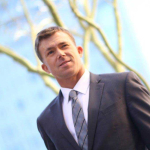
Author: Matt Miller
Matt Miller has done many things in his young life...in addition to just surviving. In 2002, Matt left behind person he once was as his life was suddenly changed forever by a horrendous mountain climbing accident. Diving for his falling father, Matt fell over 4,000 feet before miraculously stopping just short of the ragid cliffs. Through a night of survival and pain, Matt persevered but lost most of his fingers and toes as a result from frostbite. Matt does everything from public speaking, one-on-one consulting, firm strategy, as well as company retreat facilitation. With a seasoned investment background and passion for educating the investment world, Matt also can't resist sharing his comments from time to time on markets. Matt is also an avid ultra runner and outdoor enthusiast...with a big love for spending time in the Grand Canyon.